
5 Differences Between Automatic and Manual Air Management

Quick Summary
Automatic and manual air management differ mainly in who makes the adjustment. With manual control you read the gauge and set the pressure yourself, while automatic control uses sensors and a control module to hold ride height without input. Manual kits cost less and wire more simply, while automatic systems suit loads that change often.
- Manual systems rely on you to read the gauge and adjust pressure before each trip.
- Automatic systems use sensors and a control module to hold the height you set.
- The Airbag Controller starts at $310.00 AUD, a manual dual paddle valve option.
- Automatic systems add components such as sensors and a control module, increasing installation complexity.
- Choose manual control if you load your vehicle occasionally; choose automatic if your load changes often.
Table of Contents
- What Automatic and Manual Air Management Actually Mean
- How Manual Air Suspension Control Works Day to Day
- How Automatic Air Suspension Pressure Control Works
- Cost and Installation: Comparing the Real Ownership Trade-Offs
- Air Suspension for Towing: Which Control Style Suits Caravans
- Air Suspension Levelling System Performance and Off-Road Use
- Choosing the Right Setup and Your Next Step With Thor Air Suspension
- Frequently Asked Questions
What Automatic and Manual Air Management Actually Mean
Last Updated: November 10, 2026
Air suspension lets you change ride height and firmness by adjusting pressure in the airbags, and the difference between manual and automatic air management comes down to who makes the adjustment. With a manual system, you decide and act. With an automatic system, the controller decides based on load or height and corrects it for you. Thor Air Suspension designs and builds both styles, so we see how each one behaves once it leaves the box and goes on a real vehicle.
Air management is the control layer that sends compressed air into, or releases it from, each airbag. It includes the compressor, air tank, valves, gauges and the controller you use to operate them.
The distinction matters more than most buyers expect. A manual system gives you direct control but relies on your attention. An automatic system takes that job off your hands, but it adds sensors, a control module and more wiring to install and maintain. Five differences set the two apart: how you operate them, what they cost to install, how they handle towing, how they behave off-road, and how much setup they need. The sections below cover each one.
How Manual Air Suspension Control Works Day to Day
A manual system uses a controller, usually a pair of paddle valves or switches on the dash, to inflate or deflate the airbags. You watch a pressure gauge, press the paddle, and stop when the ride height looks right. Our Airbag Controller uses dual paddle valves with a 52mm gauge (0-200psi) mounted in a black powder-coated panel, so the pressure readout sits in front of you while you adjust.

Day to day, the routine is simple. Before a trip you check the gauge, add or release air to suit the load, and go. If you load the tray with a heavy tool box at the depot, you adjust the pressure before you drive off. This is the main strength of manual control: you can tune the setup to the exact load and the surface you are on.
The trade-off is attention. You have to remember to adjust, and you have to read the gauge correctly. Drivers who load and unload the same vehicle several times a day can find this quickly becomes a chore. Manual control also gives no protection if the load shifts or air leaks while you are driving, so you need to check the gauge regularly.
How Automatic Air Suspension Pressure Control Works
An automatic system measures ride height or load and adds or removes air without you touching anything. Sensors report to a control module, which runs the compressor and valves to hold the height you have set. The control module is where the automation lives, and it is why automatic systems cost more and involve more wiring.
Thor's Load Incab Control Kit is an example of a simpler step up. It lets you adjust the suspension from the driver's seat without leaving the cabin, and it works as an add-on to a MaxAir onboard air kit or with an existing tank and compressor. You can view the Load Incab Control Kit to see how the cabin controls are set up. It is a good middle ground for owners who want cabin control without a full automatic setup.
Automatic systems suit situations where the load changes often or you cannot easily check the gauge. The cost is added complexity, as sensors and a control module are additional components.
Cost and Installation: Comparing the Real Ownership Trade-Offs
Price is where most buyers start, and the figures below are Thor's own catalogue prices in AUD. They show how the options stack up before you consider installation time or running costs.
| Option | Control style | Starting price (AUD) | Best for |
|---|---|---|---|
| Airbag Controller | Manual dual paddle valve | $310.00 | Simple manual height control |
| Airbag Inflation Kit | In-cab paddle inflation, no tank | $530.00 | Cabin control without an air tank |
| Load Incab Control Kit | In-cab add-on | $486.00 | Adding cabin control to a MaxAir kit |
| Airbag Inflation - Wireless | Wireless remote inflation | $750.00 | Load assist with a remote key fob |
| LoadControl Load Assist Control Kit | On-demand onboard air | $985.00 | Full onboard air for tyres, bellows and tools |
Starting price (AUD)
The sticker price is only the first line of the total cost of ownership. A manual paddle-and-gauge kit is generally simpler to fit than an automatic system, because it has fewer components to wire and mount.
Automatic systems add components that a manual kit does not need, such as sensors and a control module, and these generally increase the complexity of installation.
Running costs also differ. Automatic systems add sensors and a control module, which are additional components that may need attention over time.
Upgrade paths matter to the total figure. The Load InCab Control Kit is described as an add-on to MaxAir Onboard Air Kits or to an existing air tank and compressor, so it can be added to a suitable setup.
Pros and cons, side by side:
- Manual control: Lower upfront cost, simpler wiring, cheaper repairs. Requires you to adjust and monitor it yourself.
- Automatic control: Holds height without input and copes with changing loads. Higher purchase and fit cost, more components, and more to check.
Installation is where the two differ. Thor's kits include installation instructions, and the controller panel is shipped unassembled so you can mount it where it suits your dash. To see what a complete setup includes before you price it out, check the Airbag Inflation Kit.

Air Suspension for Towing: Which Control Style Suits Caravans
Towing is where the choice of control style has a practical effect. A caravan changes the load on the rear of the tow vehicle every trip, so you need to consider how often you hitch and unhitch. For a caravan setup, see the LoadControl- Load Assist Control Kit, which is designed to keep towed loads level.
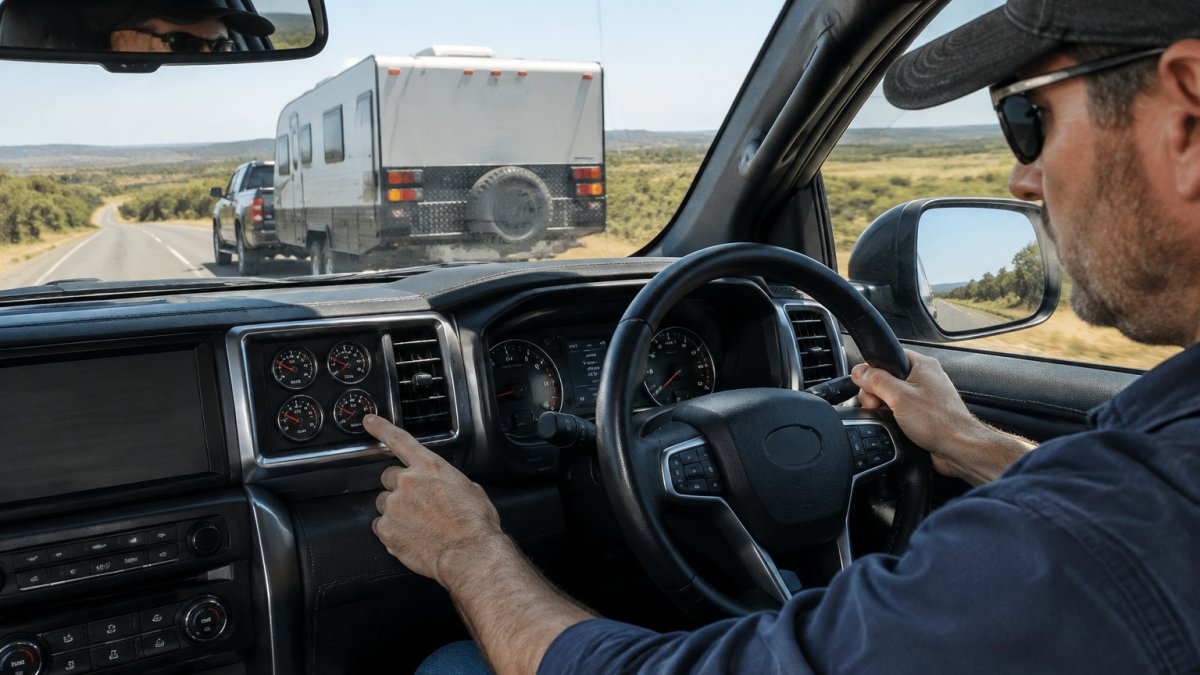
The right answer depends on how often you tow and how much attention you want to give it.
Air Suspension Levelling System Performance and Off-Road Use
Levelling is the other reason people fit air management. A system that keeps the vehicle level under a heavy load protects the suspension and keeps the steering geometry stable. Off-road, the same control helps you lift for clearance over rough ground and lower for stability at speed.
The performance difference between manual and automatic comes down to what is being controlled. A manual system controls pressure: you read the gauge and set a number, and the height that results depends on the load on that airbag.
Off-road, manual control needs you to make each change yourself, while automatic control can reduce the number of adjustments you make as conditions change. Neither style replaces good driving on rough tracks, but the right control makes the vehicle more predictable when conditions change.
Our LoadControl kit delivers 200psi on-demand air for tyres, bellows and tools, which is useful on remote trips where a flat tyre or a low bellows can stop you. Pair the control with a suitable tank and compressor, and check the gauge after every rough section.
Choosing the Right Setup and Your Next Step With Thor Air Suspension
Choose manual control if you load your vehicle occasionally and are happy to check the gauge yourself. Choose automatic control if your load changes often or you want the system to hold height without input.
If you already have a compressor and tank, the Airbag Inflation - Wireless kit (from $750.00 AUD) lets you use your existing system for remote inflation. If you are starting from scratch, the LoadControl Load Assist Control Kit (from $985.00 AUD) includes a compressor and tank of your choice. Thor Air Suspension is a family-owned Australian business with over 36 years of combined industry experience, and we are happy to help you match the right control style to how you drive.

Frequently Asked Questions
What is the difference between automatic and manual air management systems?
Manual systems, such as paddle valve controllers, rely on you to inflate or deflate each airbag and read the pressure gauge. Automatic systems use sensors, a control module and a compressor to hold a set ride height or pressure without you touching a switch. Manual control is simpler and cheaper to install, while automatic control suits drivers who change loads often or want consistent height without monitoring gauges.
Can a manual air management system level a vehicle when towing?
Yes, but levelling depends on your attention. With a manual controller such as the Airbag Controller from Thor Air Suspension ($310.00), you adjust each side while watching the dual gauge, then recheck after the caravan is hitched and again after stopping. It works well for occasional towing, four or five trips a year, where you can set pressures once and confirm them before departure.
Are automatic air suspension systems worth the extra cost?
Automatic systems cost more upfront and add wiring and sensor complexity, so the value depends on how often you change load or tow. Drivers who tow regularly or carry variable loads often find the time saved and consistent ride height worth the investment. For occasional use, a manual controller or the Airbag Inflation Kit ($530.00) may deliver enough rear support for less money.
What should I consider when choosing an air suspension controller?
Start with how often you adjust the system, what you tow or carry, and whether you can install wiring yourself. Consider the gauge type, whether you need an in-cab control, and whether you have an existing compressor and air tank. Options such as the Load InCab Control Kit ($486.00) suit those who already run an onboard air system, while the LoadControl kit ($985.00) suits a complete stored-air setup.
