
7 Top Air Suspension Pressure Gauges for Remote Touring

Last Updated: November 15, 2026
Quick Summary
The top air suspension pressure gauges for remote touring are sealed analogue units like the backlit dual gauge 200psi and the Gauge-Boss dual needle, with digital and wireless systems for precision or in-cab convenience. Choose based on readability, durability and whether you want mechanical simplicity or sender-based accuracy. Prices run from $45.00 to $985.00 depending on the kit.
- A 200psi maximum is the practical ceiling for load-assist airbags.
- The Gauge-Boss dual needle reads to 200psi and is on sale at $45.00.
- The Air Monitoring Gauge Kit at $165.00 covers monitoring and manual inflation in one box.
- The LoadControl kit at $985.00 adds a compressor, tank, valve block and pressure switch.
- Carry a spare sender on long trips if you run a digital gauge.
Table of Contents
- What Matters in Air Suspension Gauges for Remote Touring
- Quick Comparison: Top Air Suspension Gauges at a Glance
- Digital Air Suspension Gauge Options for Precision Monitoring
- Analogue Air Suspension Gauge Choices for Tough Conditions
- Wireless Airbag Pressure Gauge Systems for Remote Convenience
- Air Suspension Gauge Kit: Entry-Level to Full Control
- Durability and Accuracy in Harsh Touring Conditions
- Pressure Recommendations by Vehicle and Load
- Frequently Asked Questions
What Matters in Air Suspension Gauges for Remote Touring
Gauges suited to remote touring need to stay readable and accurate when everything around them is shaking, baking or freezing. Out on a corrugated track hundreds of kilometres from the nearest workshop, a gauge is your only window into what the airbags are actually doing.
A pressure gauge is a mechanical or electronic instrument that displays the air pressure inside your airbag suspension, letting you confirm load support and spot leaks before they strand you. That sounds simple. It stops being simple when the gauge face fogs, the needle sticks, or a sender wire rubs through on a rough track.
Below, we break down exactly what to look for, compare the gauge options we build and sell, and explain how to set pressures for real touring loads.
Selection Criteria That Actually Matter Off the Grid
Remote touring punishes gauges in ways a city commute never will.
- Accuracy and range. A 200psi maximum is the practical ceiling for load-assist airbags, so a gauge that reads cleanly across that range matters more than one with a fancy face.
- Readability. Backlit dials and clear numerals let you check pressure at dusk or under a torch without guessing.
- Durability. Vibration, dust and temperature swings kill cheap gauges. Sealed construction and solid mounting are non-negotiable.
- Failure behaviour. A mechanical gauge with no electronics cannot lose power. Digital gauges need a reliable sender and connection, so plan for that.
- Serviceability. If a sender fails, can you replace just that part, or are you up for a whole new gauge?
That last point separates a touring-ready setup from a showpiece. When you are 400km from a parts counter, a replaceable sender and standard fittings are worth more than a fancy display.
Quick Comparison: Top Air Suspension Gauges at a Glance
Here is the short version. Each option below suits a different kind of tourer.
| Gauge / Kit | Price (AUD) | Display Type | Best For |
|---|---|---|---|
| Gauge-Boss Dual Needle | $45.00 | Analogue, dual needle | Budget builds, quick pressure checks |
| Backlit Dual Gauge 200psi | $82.00 | Analogue, backlit | Night driving, low-light readability |
| Air Monitoring Gauge Kit | $165.00 | Analogue or LED digital | First load-assist setup |
| Digital Paddle Valve Controller | $310.00 | Digital, in-cab | Manual height and pressure control |
| Wireless Airbag Inflation Kit | $750.00 | Remote key fob | Remote inflation without leaving the cab |
| LoadControl Kit | $985.00 | Analogue or digital | Full onboard air and control |
Price (AUD)
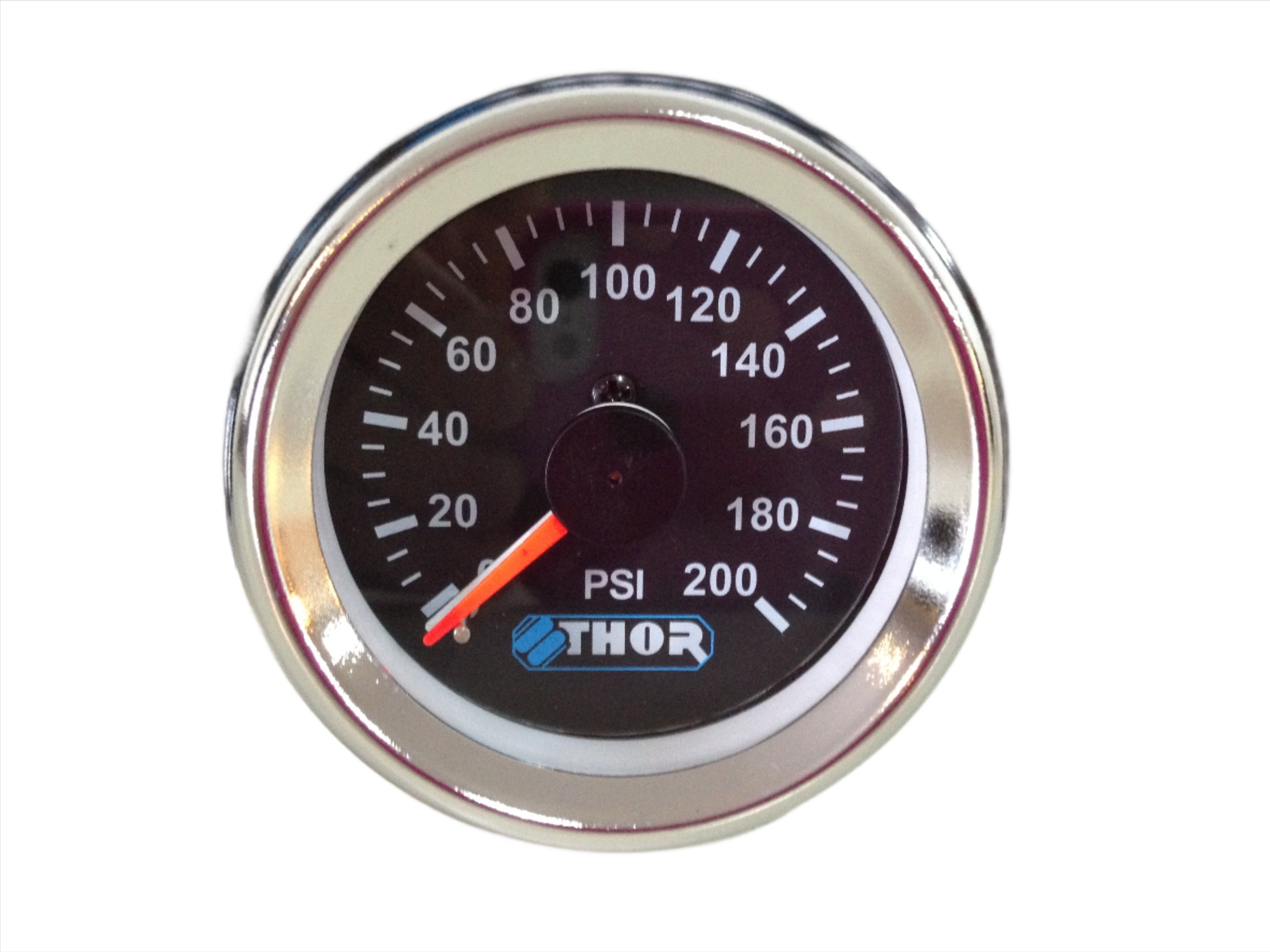
If you want to check specs side by side before deciding, the backlit dual gauge 200psi page lists the full details on our most popular analogue unit.
Digital Air Suspension Gauge Options for Precision Monitoring
A digital air suspension gauge gives you a numbered pressure reading instead of a needle position, which removes guesswork when you are balancing a heavy load. The trade-off is that digital units rely on a pressure sender and wiring, so installation quality decides how reliable they are.
The digital gauge options use electric senders, and the Air Monitoring Gauge Kit's digital version pairs a blue LED display with electric senders. A digital gauge sender replacement is available if a sender fails.
The honest limitation: digital displays need power and a sound connection. Route the wiring away from heat and moving parts, and carry a spare sender on long trips. Do that, and a digital gauge is the most precise option in this list.
The Airbag Controller with Digital Display
For drivers who want pressure and height control in one panel, our digital paddle valve controller combines a 52mm digital gauge with two manual paddle valves on a black powder-coated panel. The panel measures 133mm wide by 85mm high by 100mm deep, so it fits neatly into most ute and wagon interiors.
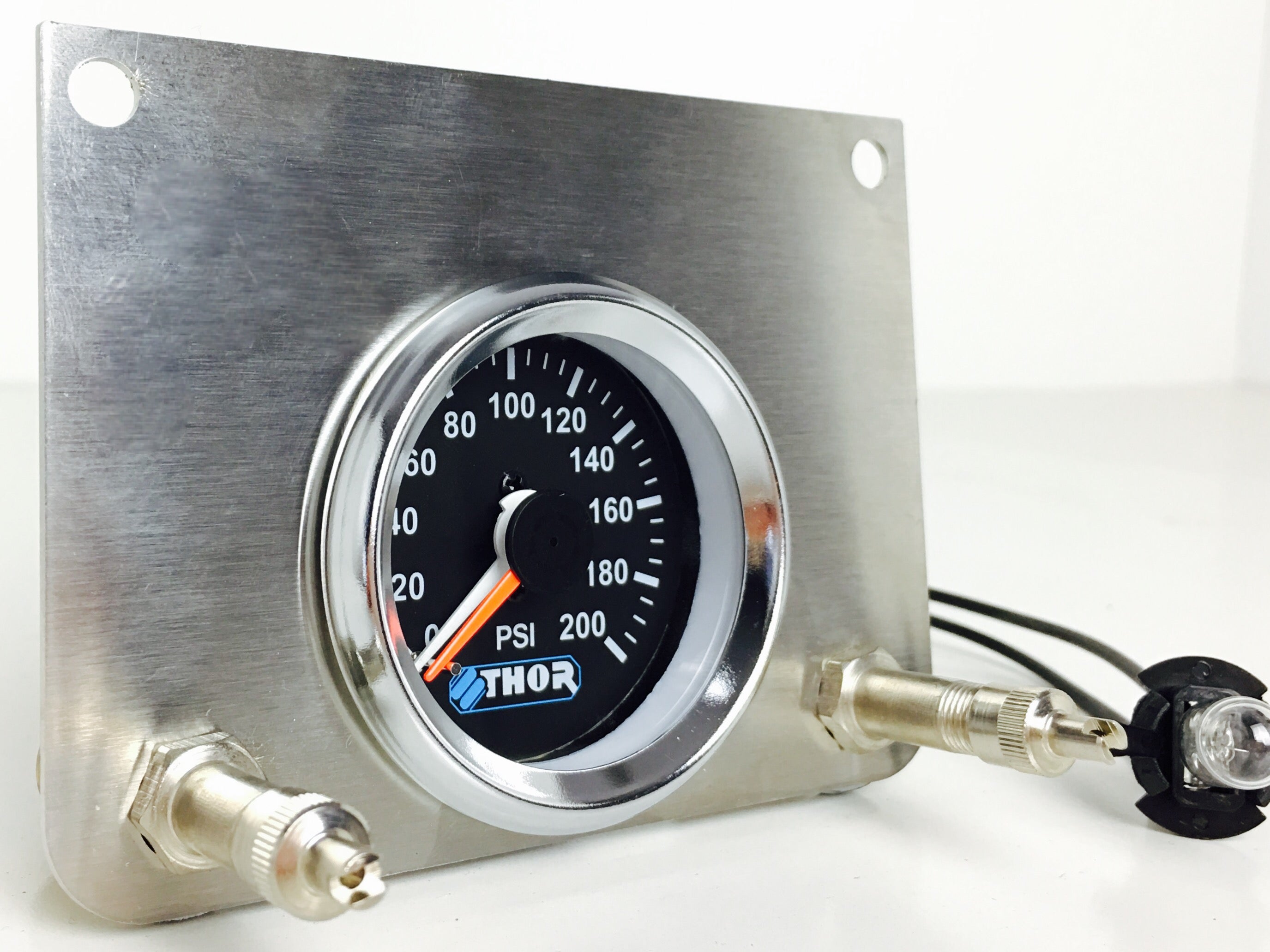
Two paddle valves give manual height adjustment, with pressure shown on the dual display. It works with your existing air tank and compressor, and the kit arrives with airline, fittings, sealant and both valve options.
Best for: drivers who want precise manual control and a clean in-cab install. Skip if: you want push-button automation with no valve work at all.
Analogue Air Suspension Gauge Choices for Tough Conditions
An analogue air suspension gauge uses a mechanical needle and a sealed dial, which means no power supply, no sender and nothing electronic to fail. For remote touring, that simplicity is a genuine advantage. The needle moves because pressure moves it, full stop.
We build analogue gauges in a 52mm format with a 200psi maximum, and the backlit versions stay readable after dark. The main drawback is precision: reading a needle takes a little interpretation, especially in poor light.
Watch out: a cheap analogue gauge with a loose bezel will fog and stick after a few thousand kilometres of corrugations. Check that the dial is sealed and the mounting is solid before you trust it with a loaded van.
Dual Needle Gauges That Handle Vibration and Temperature Swings
A dual needle gauge shows two pressures on one dial, typically left and right airbag, so you can spot an imbalance at a glance. If one bag is losing pressure, the needles tell you before the vehicle starts to lean.
The Gauge-Boss dual needle is built for suspension systems, with a clear dial face and construction that handles vibration and temperature swings. It reads to 200psi and is currently on sale at $45.00.
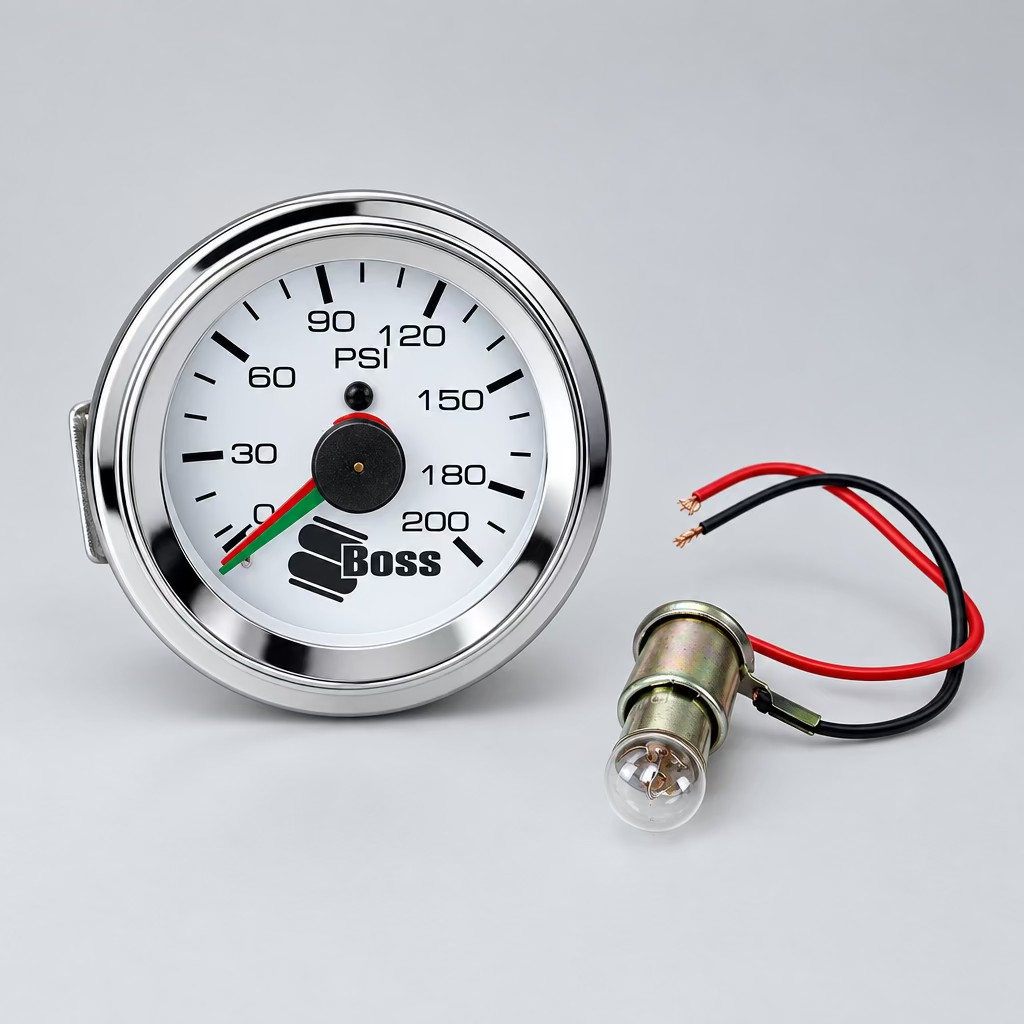
The limitation is obvious: it is a mechanical gauge with no backlight, so pack a torch for night checks. For the money, though, it does the core job well.
Wireless Airbag Pressure Gauge Systems for Remote Convenience
A wireless airbag pressure gauge system lets you inflate or deflate the bags from a key fob without leaving the driver's seat.
The wireless airbag inflation kit runs a two-bellow remote control system with a key fob, and it is designed for load-assist airbag suspension. If you already run a compressor and tank, the B1 option uses your existing setup. If you are starting fresh, the complete kit adds a TC380 compressor and your choice of tank.
The catch with any wireless system is the remote itself: batteries go flat and fobs get lost. Keep a manual inflation point as a backup, and store a spare battery with the recovery gear. Do that, and wireless control is the most convenient option here.
Air Suspension Gauge Kit: Entry-Level to Full Control
An air suspension gauge kit bundles the gauge, panel, valves and airline so you can monitor load-assist pressures without piecing parts together. Buying a kit removes the guesswork about whether the fittings match, which is where most first-time installs go wrong.
The air monitoring gauge kit is an entry-level option. It includes a 200psi dual needle backlit analogue gauge or a blue LED digital gauge with electric senders, two push-connect Schrader valves, a stainless steel panel, one metre of Australian-made SAE J844 airline and mounting hardware. At $165.00, it covers monitoring and manual inflation in one box.
The LoadControl kit at $985.00 adds a compressor, tank, valve block, pressure switch and onboard air.
What Each Kit Includes and Who It Suits
- Air Monitoring Gauge Kit ($165.00): gauge, valves, panel and airline. Suits owners who already have a compressor or just want to monitor and inflate manually.
- LoadControl Kit ($985.00): compressor, tank, valve block, gauge and full install hardware. Suits tourers who want onboard air for tyres, bags and tools.
- MaxAir Onboard Air System ($488.00): stored air for bags, tyres and tools, with your choice of compressor and tank size. Suits setups that already have gauge and control sorted.
Match the kit to what you already own. Buying a full kit when you only need monitoring wastes money, and buying a monitor-only kit when you have no air source leaves you pumping by hand.
Durability and Accuracy in Harsh Touring Conditions
Durability matters in harsh conditions. Corrugations work loose bezels and fittings, dust works into moving parts, and temperature swings from a cold desert night to a hot midday sun stress seals and dials.
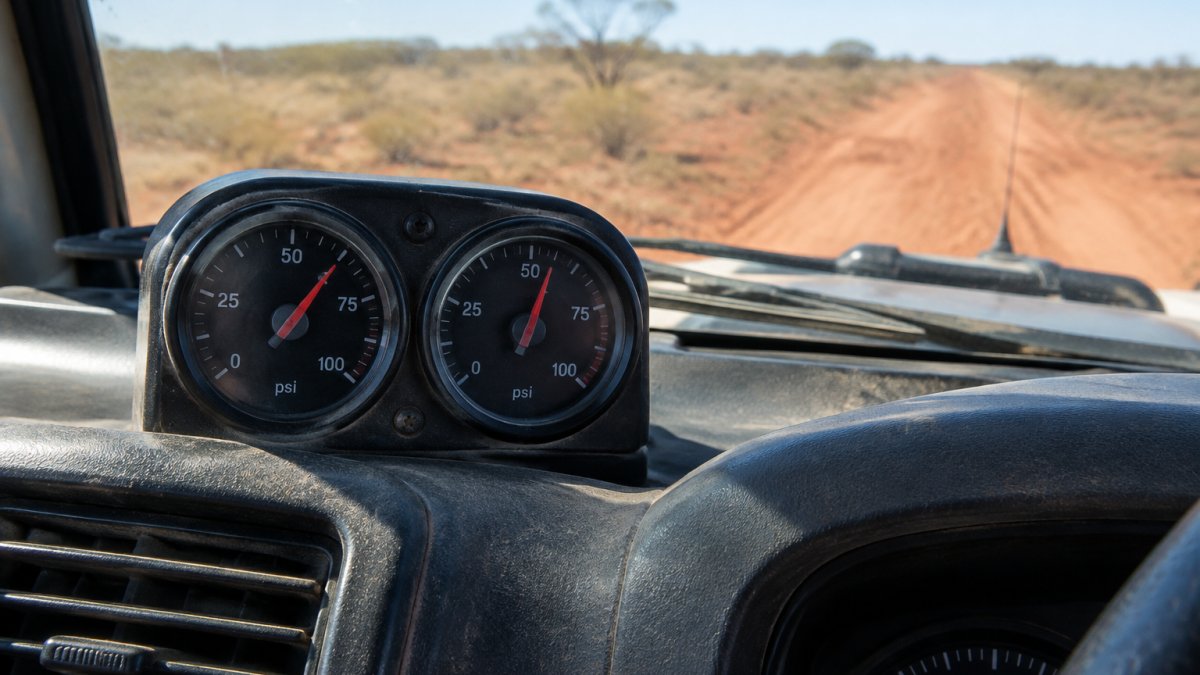
Accuracy matters just as much. A gauge that reads five psi high will have you running bags under-inflated, which shortens their life and hurts load support.
Mounting is half the battle. Solid panels and secure fittings stop the vibration that kills gauges, and our gauge mounting panel in stainless or black powder coat gives a 52mm gauge a firm, clean home.
Pressure Recommendations by Vehicle and Load
There is no single correct pressure, because the right number depends on your vehicle, your load and the terrain.
A practical starting point for load-assist airbags is a low baseline when empty, then add pressure as load goes on until the vehicle sits level and the rear stops sagging.
That is how bags get over-inflated on a cold morning and run harsh all day.
Remote touring rewards preparation, and the right gauge is part of that. Thor Air Suspension designs and manufactures Australian-designed air suspension products, backed by over 36 years of combined industry experience.
Frequently Asked Questions
What type of pressure gauge is best for air suspension?
Dual needle analogue gauges are a popular choice for air suspension because they show both airbag pressures at once, making it easy to spot a leak or imbalance. Digital gauges offer precise numerical readings, and backlit models can aid reading in low light. For remote touring, choose a gauge rated to at least 200psi with a clear dial and durable construction that handles vibration. The right pick depends on whether you prefer instant visual feedback or exact numbers.
Are digital or analogue air suspension gauges more reliable?
Both can be reliable when built for the conditions. Analogue air suspension gauges have fewer electronic parts, so there is less to fail from dust, moisture or voltage issues. Digital gauges depend on senders and wiring, but they give precise readings and often include backlighting for night driving. For remote touring, consider an analogue gauge as a simple backup and a digital gauge for accuracy. Many setups run both, or use a digital gauge with a replacement sender kept on hand.
Can you use a tyre pressure gauge to check air suspension pressure?
A tyre pressure gauge can check airbag pressure at the Schrader valve, but it is not a permanent solution. Tyre gauges often max out at lower pressures and lack the dual reading needed for two airbags. They also do not stay mounted for monitoring while driving. For remote touring, a dedicated air suspension gauge kit with a 200psi range and proper fittings gives you continuous, accurate readings and lets you adjust pressure without removing caps.
What pressure range should an air suspension gauge have?
Most load-assist airbag systems run between 5psi and 100psi, but a gauge rated to 200psi gives headroom and suits most compressors and tanks. A 0-200psi range covers typical touring loads, from empty trays to fully loaded caravans. Avoid gauges with a maximum below your system's working pressure. Dual needle 200psi gauges are common in kits because they handle both airbag circuits and stay readable across the full range.
Are wireless airbag pressure gauges accurate?
Wireless airbag pressure gauge systems use senders to transmit readings, and quality units are accurate enough for touring. Accuracy depends on the sender and calibration. Check that the system includes a reliable pressure sensor and a clear display. Wireless setups add convenience, letting you monitor and inflate from the cab or via a remote, but keep a manual gauge as a backup. For remote areas, choose a system with a proven sender and simple troubleshooting.
