
Heavy Duty Air Suspension for Farm Utes: A Practical Guide

Quick Summary
Heavy duty air suspension for farm utes replaces or supplements the rear springs with inflatable air bags that hold the rear at a set height under load. This keeps a loaded ute level on rough farm tracks and reduces rear-end sag. It does not raise the vehicle's payload or towing limits.
- Air suspension keeps the rear end closer to its unladen height instead of dropping under weight.
- Set pressure for the load in the tray, and recheck after the first kilometres of rough track.
- Build a short list of pressure settings for your regular seasonal loads rather than one figure.
- Do not exceed the payload and axle ratings on the vehicle compliance plate.
- Confirm kit fitment for your exact model and year, including leaf-spring or coil-spring design.
Table of Contents
- How Airbag Suspension Supports Heavy Farm Loads
- Ute Load Assist Suspension for Seasonal Farm Work
- Airbag Suspension for Towing: Trailers, Tow Limits and Towball Weight
- Leaf-Spring Versus Coil-Spring Applications on Farm Utes
- Choosing a Heavy-Duty Airbag Kit: Comparison and Pros and Cons
- Onboard Air Compressor for Ute Suspension: Pressure Setting and Control
- Airbag Suspension Installation and Maintenance: Keeping Your Kit Working on the Farm
- Book a Setup for Your Farm Ute
- Frequently Asked Questions
Heavy duty air suspension for farm utes works by replacing or supplementing the standard rear springs with inflatable air bags.
Here is the core trade-off to keep in mind throughout. An air kit does not raise the vehicle's payload limit. It keeps the ute level and controls sag, but the legal and safe load is still set by the manufacturer's ratings for the vehicle, axles and tyres.
How Airbag Suspension Supports Heavy Farm Loads
Airbag suspension adds load support by inflating bags between the chassis and axle. Pressure can be raised as the load goes on and lowered when it comes off. The result is a rear end that stays closer to its unladen height instead of dropping under weight.
Reducing rear-end sag and maintaining ride height
Rear-end sag is the most common complaint from farm drivers. A loaded tray pushes the rear down, which changes headlight aim, steering feel and braking balance. Raising the bags back toward a set ride height restores that geometry. Kits are designed to help keep the vehicle's stance under load, though the exact lift you get depends on the kit and the load.
Load levelling for uneven payloads
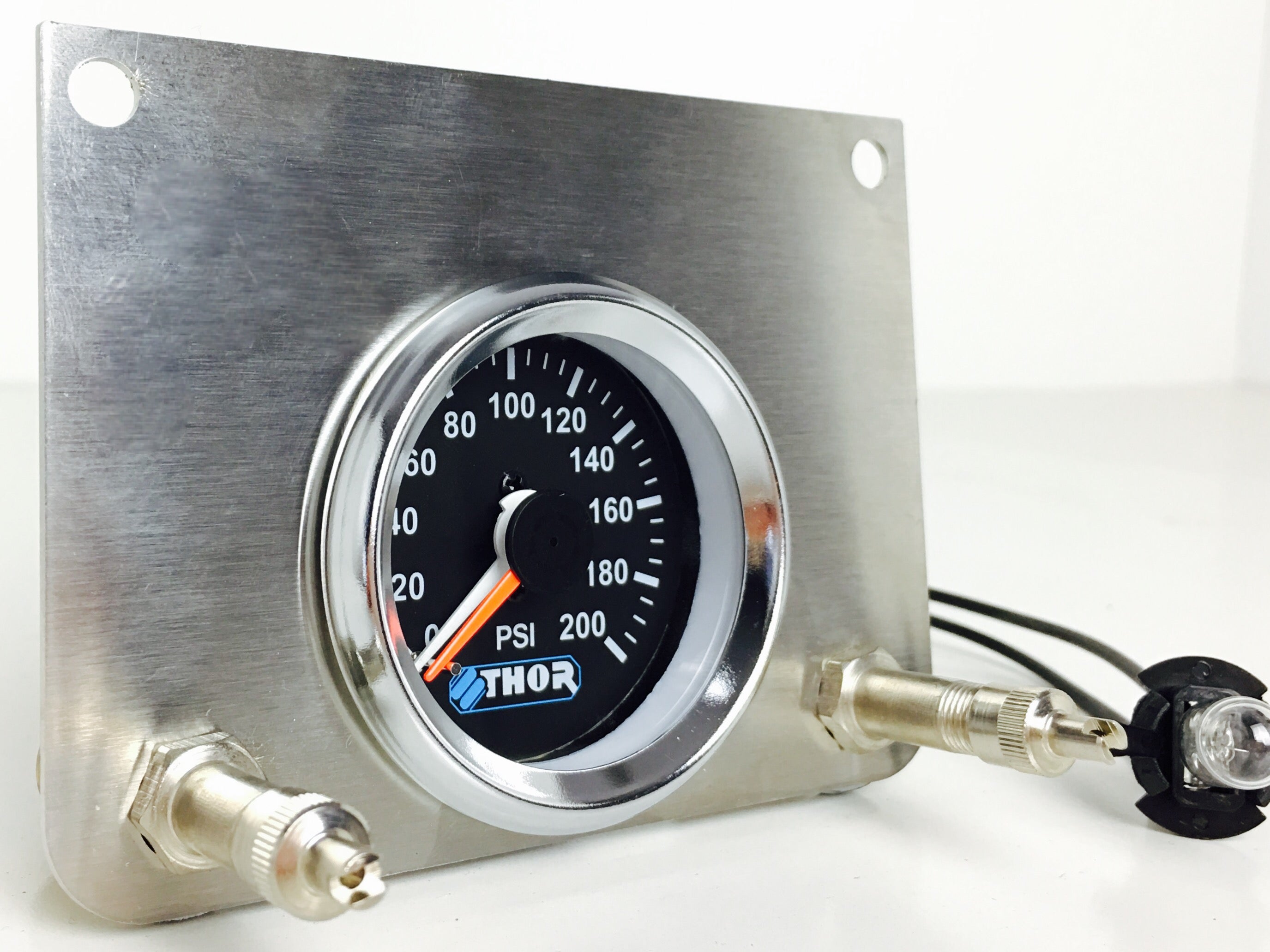
Farm loads are rarely evenly spread. A bag of feed on one side or a toolbox pushed to the back will tilt the ute. Adjusting pressure on each side of the rear can bring the body back to level. A gauge lets you read and set pressure so you are not guessing, which matters when you are loading in a hurry before a long day on the property. You can find the load assist gauge kit built for this kind of setting.
Ute Load Assist Suspension for Seasonal Farm Work
Farm work is seasonal, and a ute's load changes with it. Spring fencing, summer hay carting, autumn stock moves and winter feed runs each put different weights on the rear.
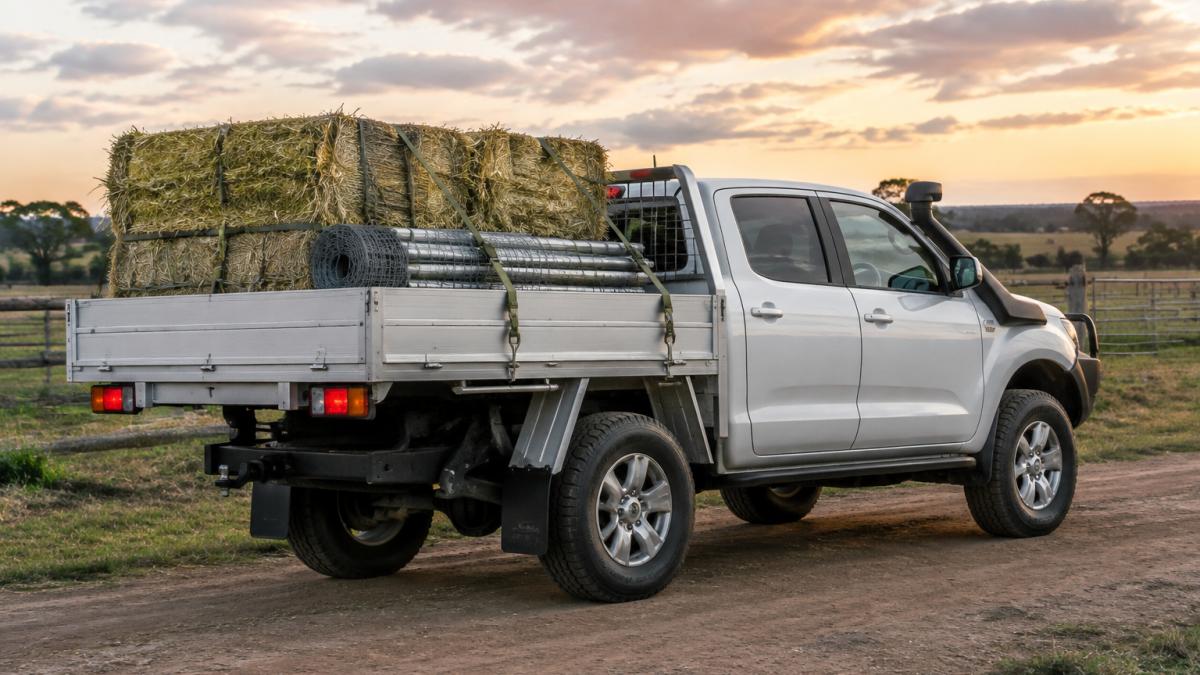
The practical approach is to build a small pressure log for the loads you actually carry. You do not need laboratory accuracy. You need a repeatable starting point you can adjust from.
A load-based method for setting pressure
- Start with the vehicle unladen on level ground and note the rear ride height from the centre of the wheel to the guard on each side. This is your baseline.
- Add the load you carry most often, such as a typical hay run or a full toolbox and fencing gear.
- Inflate the bags in small increments, checking height on both sides after each adjustment, until the rear is close to the baseline and the body sits level side to side.
- Record the pressure, the load description and the measured height on a card kept in the cab.
- Repeat for each regular seasonal load so you have a short list of settings rather than one compromise figure.
The right pressure difference between sides depends on the kit and the vehicle, so use the kit instructions and the vehicle manufacturer's specifications as the authority. Use the kit instructions and the vehicle manufacturer's specifications as the authority, and treat your log as a starting point to refine.
Checking the setting before you drive
Set pressure before you leave the yard, not on the track. After loading, check that the rear height is close to your recorded figure, that the ute sits level, and that there is clearance between the bags and any nearby components. Recheck after the first few kilometres of rough track, because load can settle and shift.
Watch out: raising pressure to chase a level stance when the ute is already at or over its axle limit does not make the load legal or safe.
Matching support to the load, not the season
Season is a rough guide, not a specification. The real variable is the combination on the tray at the time: tools plus feed, fencing materials plus a trailer, or livestock gear plus a full water tank. Note the combinations you use most and set pressure for the combination, not for a single item.
Do not exceed the payload and axle ratings on the vehicle compliance plate, whatever the suspension can hold. Air suspension supports a legal load. It does not make an overloaded ute legal or safe.
Airbag Suspension for Towing: Trailers, Tow Limits and Towball Weight
Towing is where air suspension earns its place for many owners. Raising the rear bags under a trailer keeps the tow vehicle level, which helps steering and braking. It also helps control rear sag when the towball weight pushes the back down.
Check the tow ratings for your vehicle before you tow, including the braked and unbraked trailer limits and the maximum towball download. Towball weight is a figure to confirm against the manufacturer's specifications, not an estimate. An air kit can keep the ute level under that weight.
Leaf-Spring Versus Coil-Spring Applications on Farm Utes
Many farm utes use leaf springs at the rear, and some use coil springs. The application differs between them, so check which your vehicle has before choosing a kit.
Kit contents and fitting methods vary, so confirm compatibility for your exact model and year.
Match the kit to your vehicle's suspension design rather than assuming one fits all.
Choosing a Heavy-Duty Airbag Kit: Comparison and Pros and Cons
The kits below are for models we list. Prices are in AUD.
| Kit | Price (AUD) | Best for |
|---|---|---|
| Ford Ranger, Super Duty, F250 Airbag Suspension | $745.00 | Ford Ranger and Super Duty utes |
| Toyota Hilux, LandCruiser & FJ40 Airbag Suspension | $745.00 | Toyota Hilux, LandCruiser and FJ40 |
| Mitsubishi Airbag Suspension Triton Express | See product page | Mitsubishi Triton |
| Isuzu DMax Airbag Suspension | $800.00 | Isuzu DMax |
| Mazda BT50, B-Series Airbag Suspension | $745.00 | Mazda BT-50 and B-Series |
Toyota Hilux, LandCruiser & FJ40 kits are a bolt-on option for owners who want level stance under load.

Ford Ranger, Super Duty and F250 kits suit owners carrying regular heavy payloads. Confirm the fitment for your specific model before ordering.
Mazda BT-50 and Isuzu DMax kits give owners of those utes a matched option.
Thor Air Suspension is a family-owned Australian business with over 36 years of combined industry experience. Compare the kit contents, not just the headline price, when you shop around.
Onboard Air Compressor for Ute Suspension: Pressure Setting and Control
Air needs a source. An onboard compressor and air tank let you raise or lower the bags from the driver's seat or the back of the ute.
Our Load Assist Kits can be upgraded with an On Board Air control system. This lets you adjust pressure from inside the vehicle at the touch of a button, which suits owners whose loads change through the day.
Set pressure for the load in the tray, not the empty ute, and recheck it after the first kilometres of rough track.
Airbag Suspension Installation and Maintenance: Keeping Your Kit Working on the Farm
Our kits are designed for bolt-on installation with basic hand tools and no major modifications. Each kit includes installation instructions, two heavy-duty bellows airbags, upper and lower mounting brackets, airline, fittings and a stainless steel mounting panel. Check out the assembly video on our Thor YouTube account for installation tips and troubleshooting advice.
Installation is still work, and on a farm ute the conditions around the kit matter as much as the fitment itself. Work through the checks below in order rather than jumping to the bags.
Fitment checks before you start
- Confirm the kit matches your exact model, year and rear suspension design. Leaf-spring and coil-spring utes use different mounting arrangements, and a kit listed for one will not necessarily fit the other.
- Check the vehicle compliance plate for the payload and axle ratings, and confirm the kit is intended for the loads you plan to carry.
- Inspect the existing springs, mounts and bump stops for cracks, wear or previous damage. A kit fitted over a worn component will not perform as intended.
- Check clearance around the intended bag location, including brake lines, wiring, exhaust and fuel lines, and plan any minor drilling noted in the instructions before you lift the vehicle.
Installation sequence and post-installation inspection
Jack and support the vehicle safely on level ground, follow the sequence in the instructions, and torque fasteners to the specification given. Route airlines away from heat, sharp edges and moving parts, and secure them at regular intervals so they cannot chafe.
After installation, inflate slowly and check for leaks at every fitting, then lower the vehicle and check ride height on both sides. Take the vehicle for a short, low-speed drive and recheck height, clearance and fitting tightness.
Maintenance for dust, mud and corrugations
Farm exposure to mud, dust and moisture can wear components over time. Rinse the system after heavy muddy work, keep fittings tight, and inspect the bags for cuts or abrasion. Check airlines and fittings for chafing, especially where they run near the chassis and tyres.
Fault diagnosis: what to check and in what order
- Sagging overnight or losing height: check fittings and airline joints first, then the bag itself for cuts or abrasion.
- Compressor running constantly or frequently: look for a leak at fittings, a damaged airline or a bag that is not holding pressure.
- Uneven height side to side: confirm pressure on each side, then check for a blocked or kinked airline.
- Noisy or slow adjustment: inspect the compressor and control system against the kit instructions, and check for contamination in the lines after muddy work.
Check the system before a long trip, not after you are already loaded.
Book a Setup for Your Farm Ute
If you want to confirm which kit suits your ute and load, talk through the fitment and pressure options with our team. Bring your vehicle model, typical payloads and towing needs so the right kit can be matched to the job.
Frequently Asked Questions
What does airbag suspension do on a ute?
Airbag suspension fits between the axle and chassis of a ute and uses air pressure to support the rear of the vehicle. When a heavy farm load compresses the springs, the airbags inflate to restore ride height and stop rear-end sag. Adjusting air pressure lets the rear sit level whether the tray is empty or loaded with feed, water or equipment. It also helps keep steering and braking geometry closer to what the manufacturer intended, which improves stability on rough farm tracks.
Can airbag suspension help a ute carry heavy farm loads?
Airbag suspension can help a ute carry heavy farm loads more comfortably and safely, but it does not increase the vehicle's legal payload. The gross vehicle mass, axle load and tow ratings set by the manufacturer still apply. Within those limits, air support keeps the rear level under load, reduces sag and helps maintain headlight aim. Always check the payload figure on the compliance plate before loading, and never exceed it because an airbag kit is fitted.
Do you need an onboard compressor for ute airbag suspension?
An onboard compressor is not strictly required, since airbags can be inflated with a portable pump or at a service station. However, an onboard system lets you adjust pressure from inside the cab as loads change through the day, such as moving from an empty tray to a load of fencing materials. Thor Air Suspension offers an optional On Board Air control system for its Load Assist Kits, which can be upgraded to adjust air pressure at the touch of a button.
How should airbag suspension be maintained on a work ute?
Check airbag pressure before each trip and inspect the airbags, mounting brackets and airline for chafing, cracks or leaks, especially after rough farm track use. Keep fittings tight and clean any dust or mud from valves. Periodic checks of the mounting hardware help prevent movement that wears components early. If the system loses pressure overnight, fault-find the valves and fittings before continuing to load the vehicle.
